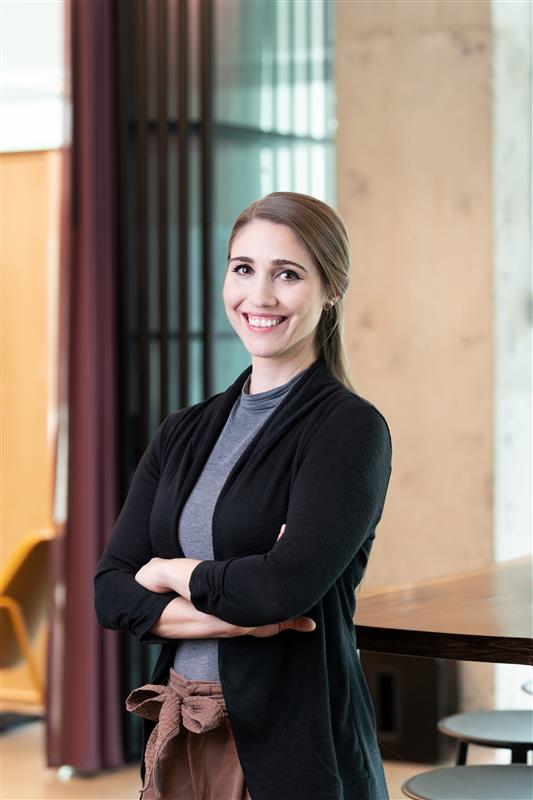
This week, we are highlighting Michelle Smith Cowman, Architect at S2, who champions collaboration, clarity, and thoughtful problem-solving in every project. She is dedicated to creating sustainable, community-anchored spaces that reflect local needs and enrich daily life.
How do you contribute to a collaborative environment?
I believe that realizing a design vision is a team effort. Getting there requires a team-based approach focused on good communication and a shared vision, which for me, is essential to the project’s success. Engaging the team to fold in expertise and feedback requires a well-organized approach to proactively communicate and listen to arrive at a solution that is responsive to many different, and sometimes conflicting, factors – the client’s goals and objectives, policy and codes, the voice of the community, environmental stewardship, challenges and risks – the list goes on. Important at project outset is to actively understand, record and communicate where we are going to maintain a shared vision and pathway to the project’s success.
How do you prioritize the well-being of your team, the environment, and the community in your professional endeavours? Share a specific example of how this approach has contributed to the success of a project or initiative in your career.
Team – Everyone is a part of the project’s success and has an important role to play. Clear communication of project goals, expectations, and understanding everyone’s roles and responsibilities is important to empowering and encouraging each member of the team to strive for design excellence. For me, this includes taking the time to mentor and learn from each other.
Community – We impact the community through what we design. As such, we have the responsibility to consider how the design will benefit the community and make people’s lives better. How does the project give back? How does it create space for community? How does it encourage future development to follow in its footsteps? When designing a daycare in Northern Alberta, our approach including considering the needs of the community not only to provide much needed day care spots for families, but to also provide a platform for childhood education. Through using early childhood learning components of colour and shapes, the foundation of the project provided a springboard where the daycare provider invited the community to develop culturally relevant interior components. Each member of the team supported the vision, which was successfully delivered from design through to construction, right down to the vibrantly painted atrium and execution of each room’s story nook that featured local handcrafted bench cushions and gathering rugs. We were honoured to be a part of the project that created space to connect to culture and local heritage. At the end of the day, the work we do is for people. It should embody values in creating community, health lifestyles, environmental stewardship, and beauty. Architecture has the potential to not only provide shelter and function to allow us to carry out our day to day but should also elevate our experience of the world around us.
Share one small change you’ve made to live more sustainably and help maintain a balance between our actions and the natural world.
At the conception of each project, a design vision that embodies reduction of energy consumption and heat gain is top of mind. For me, this means embedding environmental responsiveness into a holistic architectural approach, rather than an afterthought, through the consideration of long-lasting materials with embodied carbon and careful composition of glazed elements to connect to the environment and define spatial and formal relationships while reducing energy loss and heat gain. At a personal level, our family recycles, composts, gardens and reduces water use wherever possible. We are teaching our two young children the importance of caring for our planet and ourselves in an active and conscious way.