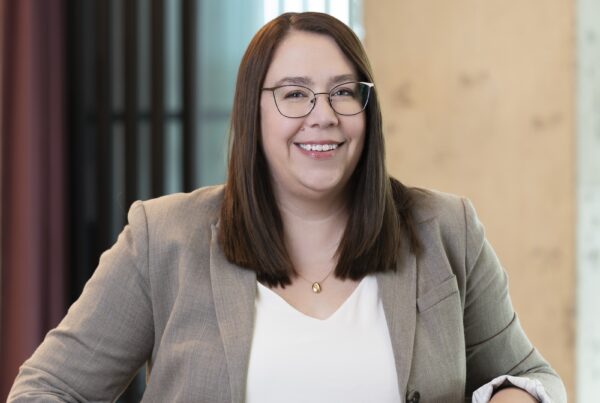
In this chapter of our very first #BuildTogether Employee Spotlight series, Associate Natalie Weiss reflects on the power of everyday role models, designing people-centred public spaces, and leading with empathy grounded in lived experience.
Are there any individuals in architecture or interior design who have inspired you along your journey?
Yes, absolutely. Being a practical person, I don’t gravitate towards famous individuals. The people who have inspired me most have been friends, acquaintances, colleagues and industry representatives that I’ve crossed paths with along the way. Seeing how they balance work and life with integrity, resilience and generosity has been far more influential to me than any headline figure.
What types of projects are you most passionate about, and why?
Passion, for me, is driven by a deep desire to improve the built environment within large public spaces. I’ve always felt a strong commitment to bringing user functionality and well-being to the spaces I help shape, positively impacting many people in meaningful and lasting ways.
Do you think your lived experience influences your approach to design and leadership? If so, how?
My lived experiences have definitely influenced my approach to design and leadership. The perspectives I bring are shaped by those experiences, informing how I think about space, people, and decision-making. For example, the management and facilities insights I gained early in my hotel and restaurant management career naturally dovetailed into my design approach—from material selection and functionality to how I lead teams and consider end users.
Can you share a barrier or challenge you’ve faced in your career, and how you overcame it?
We face challenges every day; that’s what makes life interesting. It’s how we meet those challenges that define who we are and create opportunities for growth. One ongoing challenge, regardless of industry, is learning to communicate effectively with difficult personalities. Finding common ground, staying open to different perspectives, and accepting what is within our control have been key to developing the right mindset and navigating this challenge successfully.
What does leadership mean to you today, and how has that definition evolved over time?
Early in my career, I viewed leadership as hierarchical and tied to titles, often modelled by architects in senior roles. Over time, my perspective evolved. Today, I see leadership as the ability to influence, guide, and support others—regardless of title—toward shared or individual goals.
What are you most proud of as you look back over your career—whether an achievement, learning, or personal growth?
Creating interior environments that positively impact the people who use them—spaces that are thoughtfully designed to be functional, inspiring, and supportive.
What positive changes have you witnessed for those in the industry, and where do we still have work to do?
The industry has seen meaningful growth in the number of women overall, including in leadership and mentorship roles. This shift has contributed to a more supportive and inclusive workplace culture. Though there is still work to be done to provide continued advancement, equitable opportunities, and strong representation for women at all levels of leadership.
How do you hope to support and advocate for the next generation of leaders?
By actively listening to their perspectives, encouraging their ambitions, and offering mentorship to help guide and support their development as leaders.
What advice would you give to individuals looking to enter or grow in the architecture and interior design industry?
Invest in an education that supports licensure, pursue accreditations aligned with your passions, and actively give back through mentorship and community involvement. Establish clear goals and boundaries to support work–life balance and build a career that’s both creative and enduring.
What are you most excited about the future of design?
I’m excited by a future where more efficient administrative processes give designers their time back—time to think, to collaborate, and to design again.