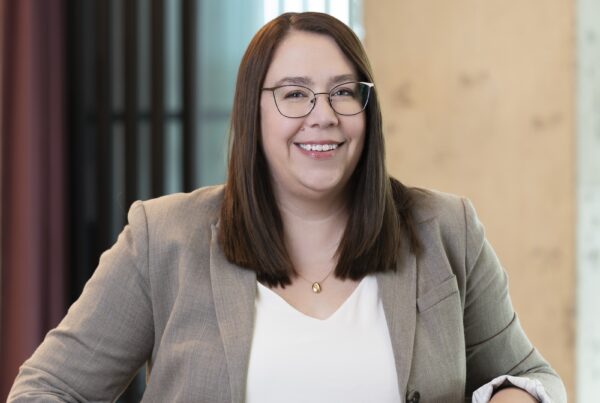
In this chapter of our #BuildTogether series, Principal Genevieve Giguere reflects on leadership, career growth, and what it means to support the next generation in the industry.
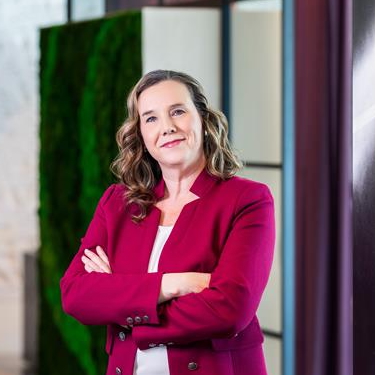
What types of projects are you most passionate about, and why?
I wouldn’t say I’m passionate about one specific project type. For me, everything we do links back to how people interact with the built environment.That said, I do have a soft spot for projects that are closely tied to the day-to-day lives of people.
Seniors care, for example—how those buildings are integrated into communities, but also how they become communities in their own right. Senior living environments often evolve into their own little villages, which I find really interesting. These are multi-layered buildings. They’re set within a broader community, but they also create their own sense of place and belonging.
Emergency services projects are very different, but equally meaningful. Those buildings are about outreach—about giving first responders the ability to support their communities effectively, and how we, as designers, can help enable that.
They’re very different building types, but both are rooted in community support and being built for the community.
What does leadership mean to you today, and how has that definition evolved over time?
Early in my career, I often confused management with leadership. That’s probably common, especially when first stepping into management roles.
I was very fortunate to have strong role models at S2—some who are still here and some who have moved on—who really showed me what leadership is. To me, leadership comes down to the level of support you offer others and how you enable them to succeed.
As a leader, you may provide guidance or direction, but more importantly, you’re there to support other people’s success. That’s the most rewarding part of what I do. I can only be successful if I help others get to where they want to go and become who they want to be.
Leadership isn’t about assigning tasks or checking work. It often happens in the small moments—impromptu conversations, taking the time to sit with someone, understanding what they’re passionate about, and helping them find a path forward.
That approach has very much been ingrained in S2’s culture from the beginning. The founding partners of S2 Architecture created an environment that was supportive, not directive—working through problems together, guiding rather than giving answers.
People here genuinely care about each other and each other’s success, and that’s what ultimately makes both individuals and the firm successful.
What are you most proud of as you look back on your career—whether an achievement, learning, or personal growth?
There’s a lot to reflect on. When I look back at my career to date, I’m often surprised by the sheer variety of projects I’ve been able and fortunate to work on. I never expected to have that level of diversity in my career, and it’s something I’m really proud of. That variety is what keeps me energized. After 25 years, it’s not the environment that needs to feel fresh—it’s the day-to-day work.
I’m also proud of the stability of my journey. I started my career at S2 at a very young age, just a few years out of architecture school, and I was able to grow here, build a path forward, and feel both comfortable and fulfilled.
Now, being in a position where I can help others do the same is incredibly meaningful to me. It’s not a single proud moment, but rather a proud journey, one that I’m still on.
How do you hope to support and advocate for the next generation of leaders?
I’d like to remove the word “hope” from that question, because this isn’t something I plan to start now—it’s something I’ve been doing throughout my career.
When I was in architecture school, the gender split was about fifty-fifty. But when I entered the profession, particularly in Western Canada, it was a very different reality. In the first two offices I worked in, there were very few female architects, and in one case, none at all.
That has changed significantly over time, though it’s hard to pinpoint exactly why. I’ve always felt it was important to support anyone building a career in architecture. It’s not an easy profession, not for the faint of heart.
I don’t think I made a conscious, targeted effort to support women specifically, but I do believe that as I grew in my career, younger women could see that leadership was possible here. That visibility matters. The industry is evolving, and it’s encouraging to see more women building long-term careers in architecture. We all see the world differently, and those perspectives are what makes architecture diverse and interesting.
For me, continuing to be a supportive leader is how I advocate. If that encourages individuals to keep growing their careers in architecture, then that’s exactly what I want to keep doing.